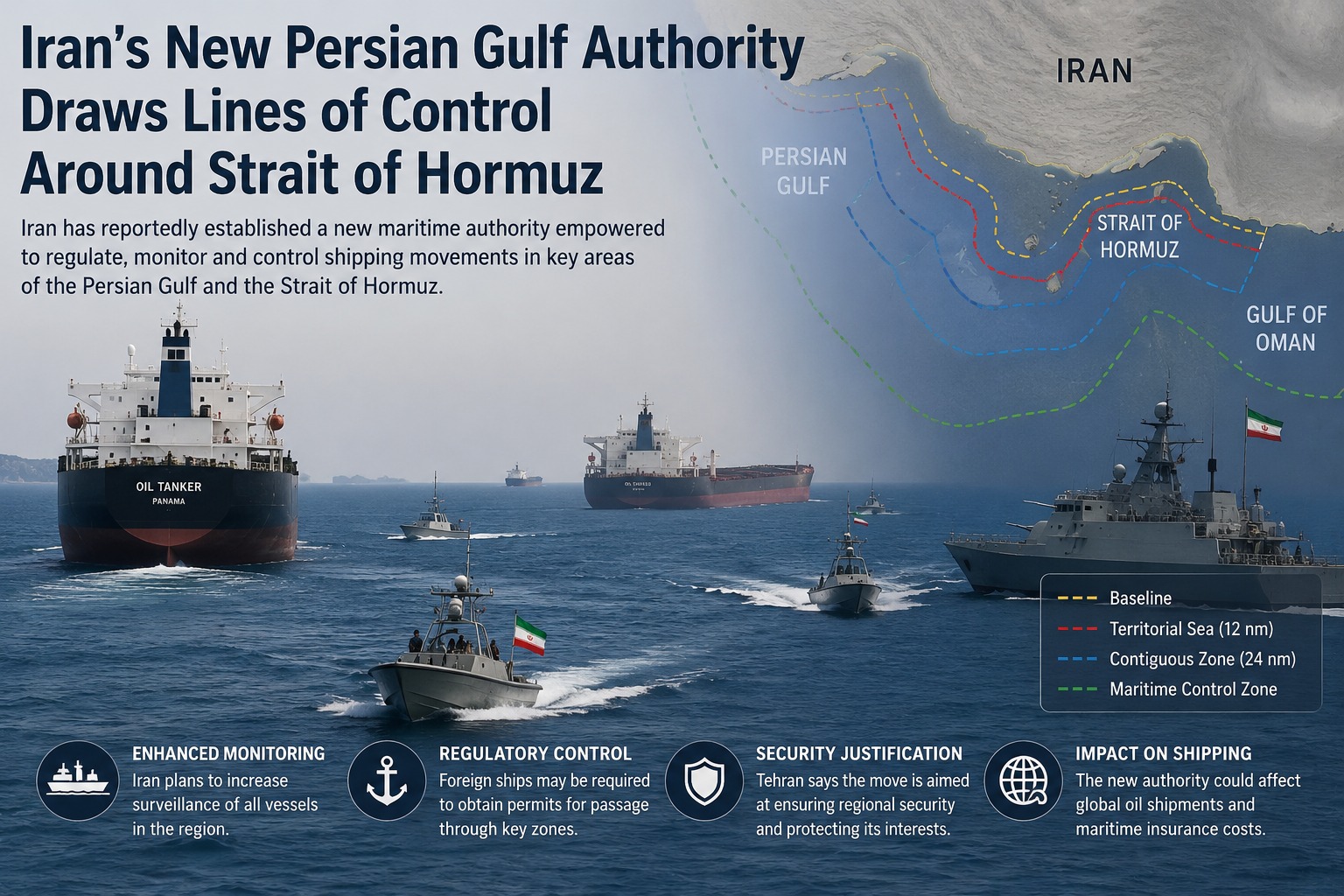
Iran has intensified its efforts to formalize control over the strategically vital Strait of Hormuz by establishing a new body known as the Persian Gulf Strait Authority (PGSA), a move that is already sending shockwaves through global shipping and energy markets.
The newly created authority announced the formation of a “controlled maritime zone” across key sections of the Strait of Hormuz, one of the world’s most critical shipping chokepoints. According to statements released by Iranian-linked media and international reports, vessels transiting the area may now require coordination and authorization from the authority before passage.
The Strait of Hormuz handles nearly one-fifth of global oil and liquefied natural gas shipments, making any disruption or regulatory tightening a matter of international concern. Shipping companies, tanker operators, insurers, and global energy traders are closely monitoring developments as tensions in the region continue to rise.
Iran says the authority is intended to manage maritime traffic, improve security, and organize vessel movement through the waterway. However, critics argue the move represents an attempt to institutionalize Iranian influence over international shipping lanes and potentially introduce transit fees or restrictions.
Reports indicate that ships may be required to submit cargo details, routing information, ownership documents, and crew manifests before receiving approval to transit the strait. Maritime analysts warn that additional bureaucracy and uncertainty could increase delays, freight costs, and operational risks for shipowners.
The move also comes amid heightened geopolitical tensions in the Gulf region, where military activity, sanctions disputes, and shipping security concerns have intensified in recent months. Several industry experts believe the establishment of the PGSA signals a longer-term strategy by Tehran to expand administrative and operational oversight over Hormuz traffic.
Regional and global powers are expected to closely evaluate the legal implications of the new measures, particularly concerning international maritime law and freedom of navigation principles.
As the situation develops, the global maritime industry remains focused on the stability of the Strait of Hormuz — a waterway that remains central to world energy security and international trade flows.